
SURINAME INVESTMENT GATEWAY
Suriname's Infrastructure:
South America's Hidden Advantage
From a 1,504-metre bridge spanning the Suriname River to a 180 MW hydroelectric dam, a deep-water international port, and a modern international airport — Suriname has built the foundation your business needs to thrive.
Why Invest in Suriname's Infrastructure Sector?
Suriname is not a frontier market — it is a mature, connected, and energy-independent nation with world-class infrastructure that rivals much larger economies. Every pillar of modern business infrastructure is in place and expanding.
Physical Infrastructure
A 1,504m river bridge, 4,530 km road network, and the Sustainable Infrastructure Development Plan 2050 — Suriname's physical backbone is built to last.
Energy Independence
The 180 MW Afobaka hydroelectric dam powers the nation. A $1.4B expansion roadmap ensures reliable, scalable energy for any industrial operation.
Maritime Logistics
The Port of Paramaribo handles 500–600 vessels annually. Kuldipsingh Port expansion adds modern container capacity. Direct Atlantic shipping lanes to Europe, North America, and Asia.
Air Connectivity
Johan Adolf Pengel International Airport serves 519,000+ passengers annually with direct routes to Amsterdam, Miami, and the Caribbean. A $205M expansion is planned.
Digital Infrastructure
Mobile penetration exceeds 100%. Internet reaches 75% of the population. Median mobile speeds above 50 Mbps. Suriname is digitally connected and ready for business.
Waterway Network
1,200 km of navigable waterways serve as Suriname's natural logistics arteries, connecting coastal operations to the interior and enabling bulk cargo transport.
The Numbers That Make the Case
Hydroelectric Capacity
Afobaka Dam, Brokopondo
Airport Passengers
JAP Airport, 2025
Port Vessels Annually
Port of Paramaribo
Bridge Span
Jules Wijdenbosch Bridge
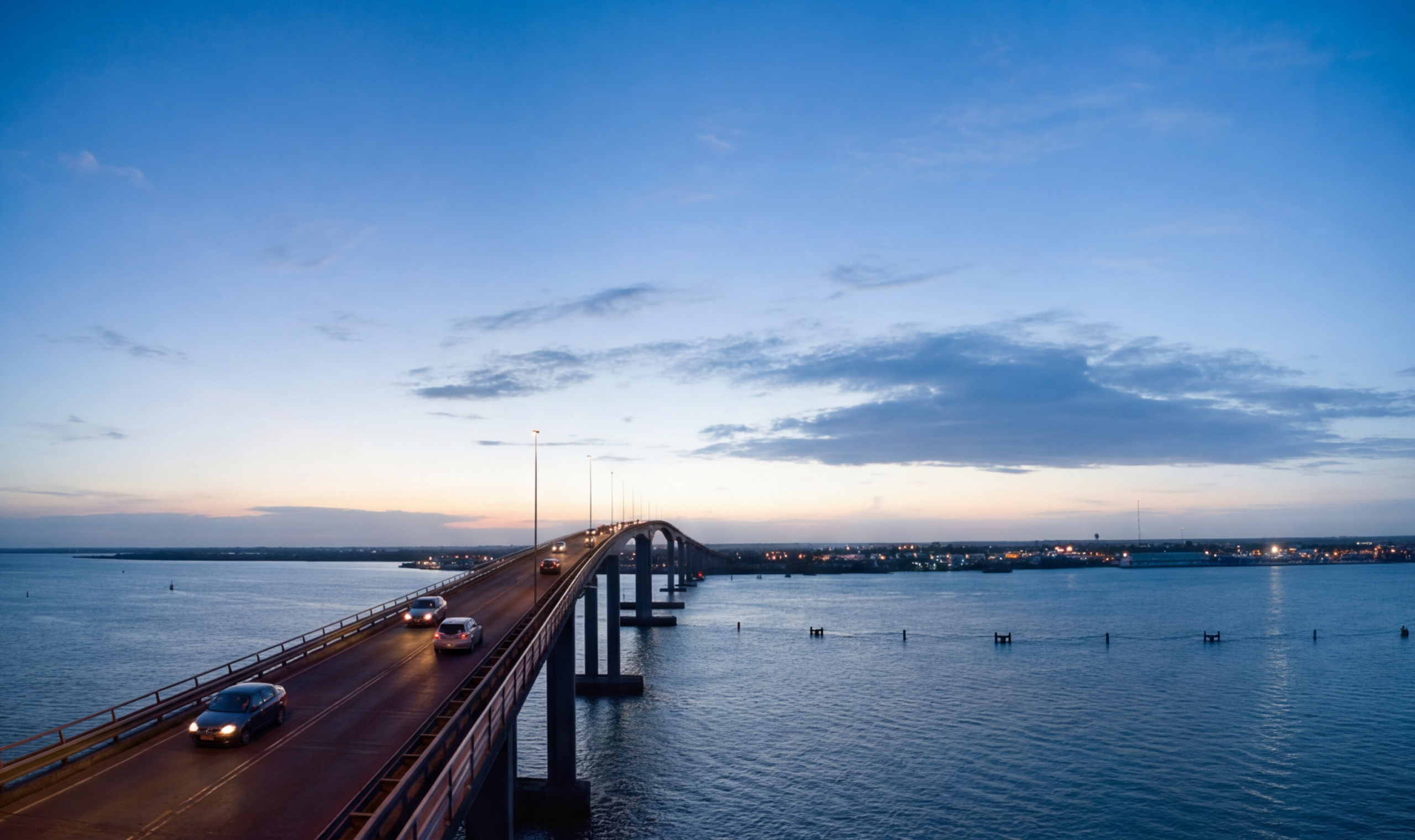
Connected Corridors. Integrated Arteries.
Road Network Overview
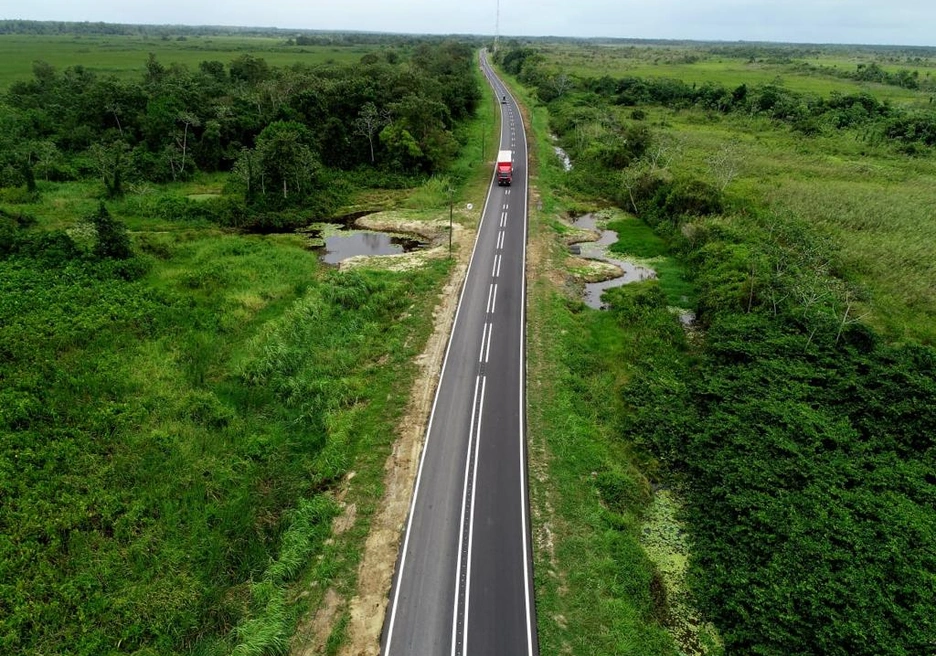
Suriname's road network spans 4,530 kilometres, concentrated in the productive northern coastal region where the majority of economic activity takes place. The network was unified into a single integrated system with the construction of bridges across the Coppename River (1999) and Suriname River (2000), eliminating critical bottlenecks that once fragmented the country's logistics.
The Sustainable Infrastructure Development Plan Suriname 2050 (SIDPS), launched in 2025, charts a comprehensive roadmap to expand and modernise the road network, integrate public transport, and connect Suriname to regional markets including Brazil. The IDB has already committed investment to improve road connectivity for agricultural export corridors.
Jules Wijdenbosch Bridge
THE GATEWAY SPAN
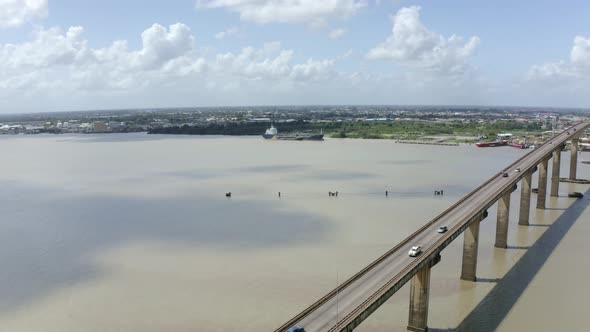
At 1,504 metres, the Jules Wijdenbosch Bridge spans the Suriname River, connecting the capital Paramaribo to the Commewijne district. Opened in 2000, this two-lane concrete arch bridge is a critical logistics artery that unlocked the agricultural and industrial potential of eastern Suriname.
TOTAL LENGTH
YEAR OPENED
Lanes
OPERATIONAL
Total road network
Coppename & Suriname Rivers
National infrastructure plan
IDB Backed
International development funding
Sea Ports: Your Gateway to the Atlantic
Suriname's strategic Atlantic position places it at the crossroads of Caribbean, South American, and transatlantic shipping lanes — with port infrastructure to match.
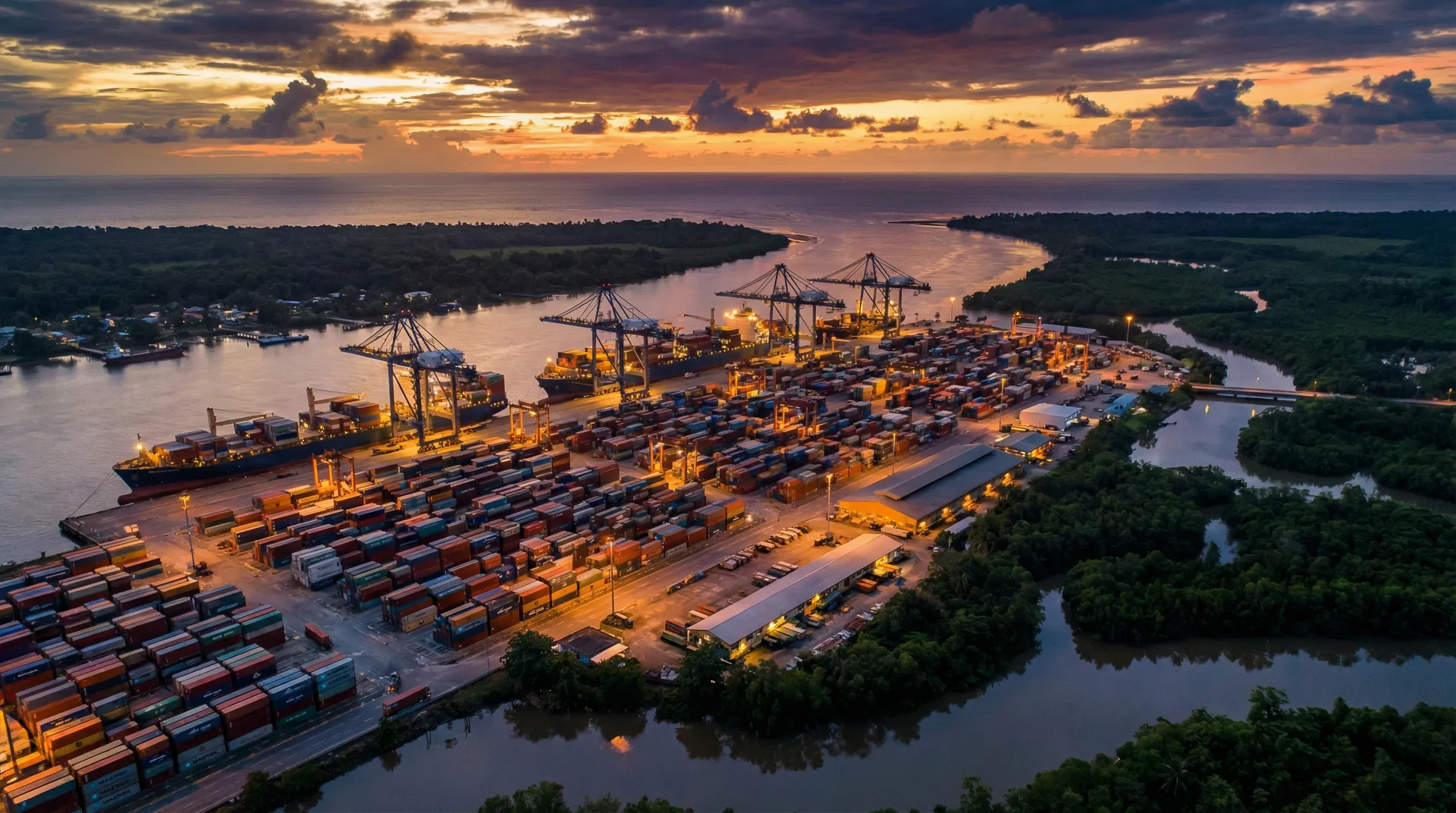
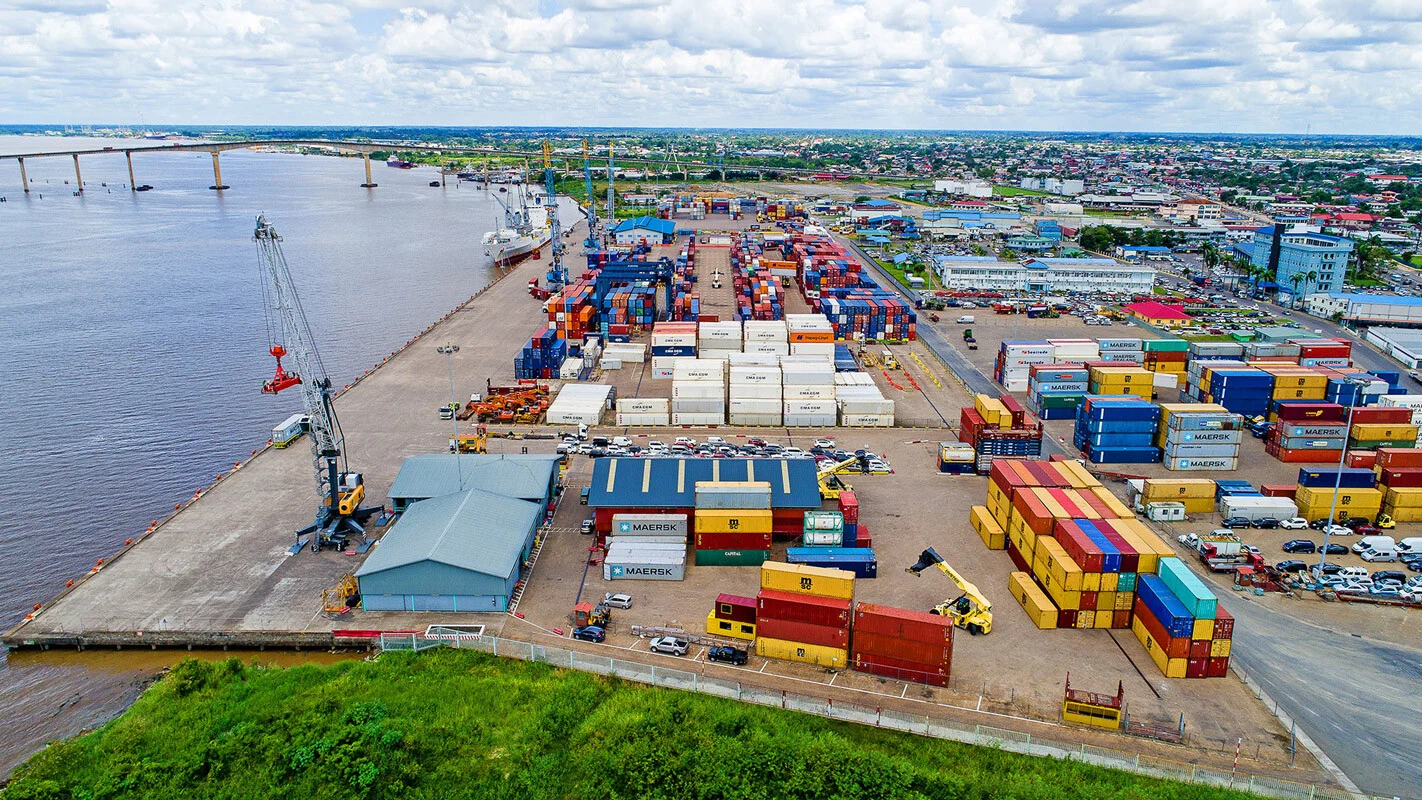
PRIMARY DEEP-WATER PORT
Port of Paramaribo
The main commercial port handles 500–600 vessels annually, serving as the primary gateway for Suriname's imports and exports. Located on the Suriname River, it provides direct access to Atlantic shipping lanes with connections to Europe, North America, and Asia.
500–600
VESSELS/YEAR
Atlantic
OCEAN ACCESS
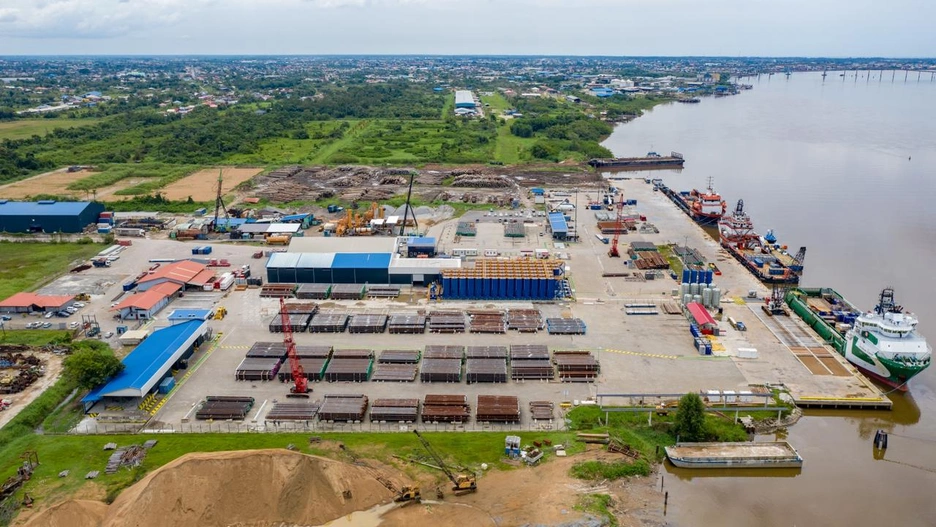
EXPANDING CONTAINER TERMINAL
Kuldipsingh Port
IDB Invest has committed financing to expand Kuldipsingh Port, adding modern container handling capacity and improving Suriname's logistics competitiveness. This expansion directly supports the growing oil and gas sector as well as agricultural exports.
IDB
BACKED EXPANSION
Container
TERMINAL
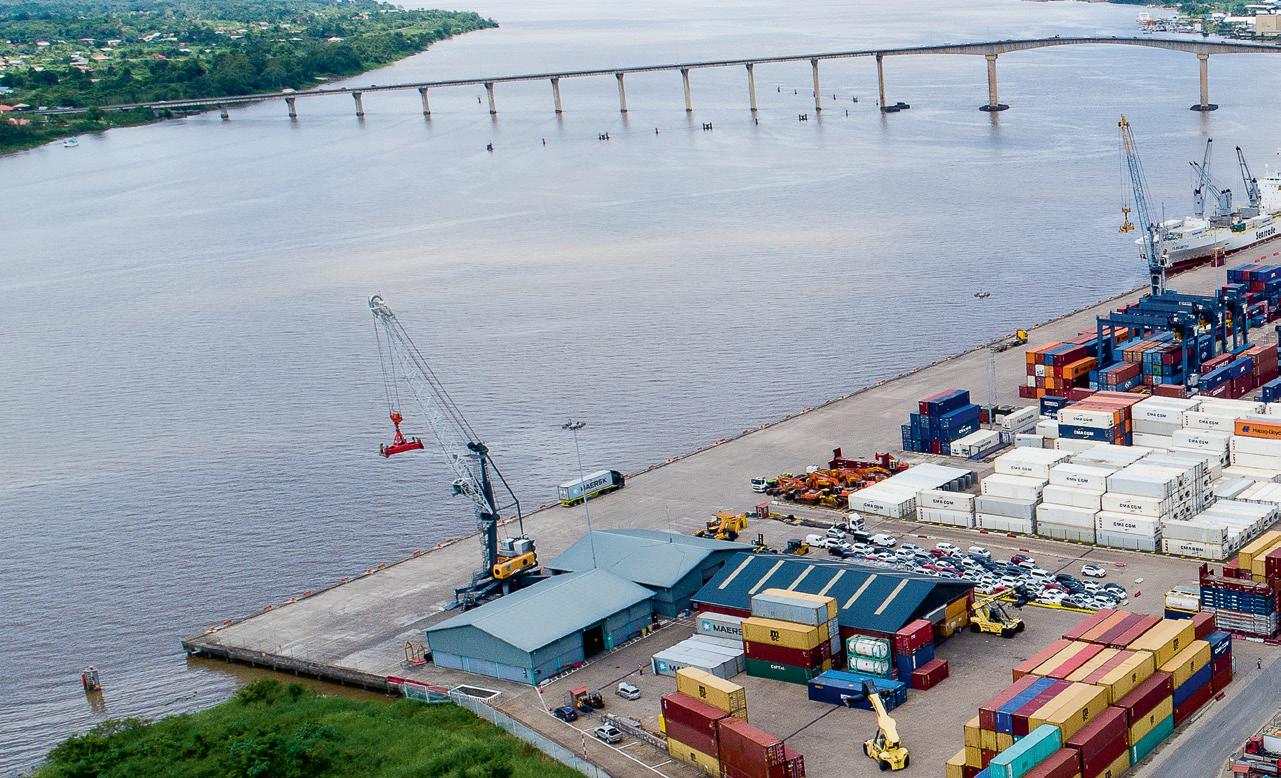
INDUSTRIAL & BULK CARGO
Nieuwe Haven
Suriname's industrial port facilities handle bulk cargo, petroleum products, and heavy equipment. With dedicated stevedoring services from operators like VSH Shipping, the port ecosystem provides comprehensive logistics support for any industry.
Bulk
CARGO HANDLING
Full
STEVEDORING SERVICES
Strategic Atlantic Location
Suriname sits at the crossroads of Caribbean, South American, and Atlantic shipping lanes. Weekly container service connects to major Asian ports, while direct routes serve North American and European markets. The country's position — just north of the equator on South America's Atlantic coast — makes it a natural transshipment hub.
NL - Amsterdam
~14 days
US - Miami
~4 days
EU - Rotterdam
~16 days
Caribbean
~2 days
AIR CONNECTIVITY
Johan Adolf Pengel International Airport
Located 45 km south of Paramaribo, JAP Airport (IATA: PBM) is Suriname's primary international gateway. With a 3.5 km concrete runway capable of handling wide-body aircraft, the airport connects Suriname to Europe, North America, and the Caribbean — making it one of the best-connected airports in the Guiana Shield region.
Passenger traffic reached 519,171 in 2025 — a 6% year-on-year increase — reflecting growing business and tourism activity. A US$205 million expansionis planned, including a new terminal and 2.7 km parallel taxiway, to accommodate the anticipated surge in traffic driven by the offshore oil boom.
Passengers (2025)
Runway Length
Expansion Planned
Airlines & Destinations
KLM
Amsterdam
Daily
Surinam Airways
Amsterdam, Miami, Caribbean
Multiple Weekly
Copa Airlines
Panama City
Weekly
Caribbean Airlines
Port of Spain
Weekly
Gol Linhas Aéreas
Belém, Brazil
Weekly
Amerijet (Cargo)
Miami
Cargo Weekly
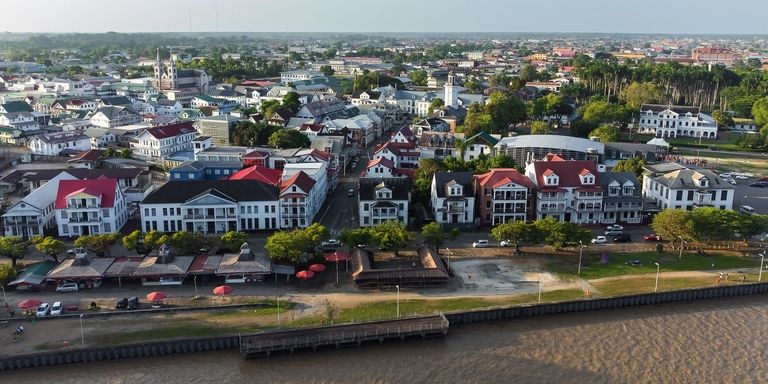
Zorg en Hoop Airport
A second airport in Paramaribo serves domestic and regional flights, providing redundancy and flexibility for business aviation. Suriname's dual-airport system ensures operational continuity for time-sensitive cargo and executive travel.
Energy Independence. Industrial Scale.
Suriname is largely self-sufficient in energy — a critical advantage for energy-intensive industries. The Afobaka hydroelectric system provides clean, reliable baseload power, while a $1.4 billion expansion roadmap ensures capacity for future growth.
BROKOPONDO DISTRICT, SURINAME RIVER
Afobaka Hydroelectric Dam
Built between 1961 and 1964, the Afobaka Dam is one of South America's most significant hydroelectric installations. The 54-metre earthfill dam creates the Brokopondo Reservoir — one of the world's largest artificial lakes at 1,560 km² — and powers a 180 MW station with six Kaplan turbines.
The dam generates approximately half of Suriname's total electricity. Staatsolie is actively studying modernisation to increase output and efficiency, while a national roadmap targets $1.4 billion in power sector expansion to support the anticipated energy demand from offshore oil operations.
Installed Capacity
Dam Height
Reservoir Area
Water Volume
Total Grid Capacity
Expansion Roadmap
Offshore Oil: The Next Energy Leap
TotalEnergies and APA Corporation have made a $10.5 billion Final Investment Decision for the GranMorgu project on Block 58 — Suriname's first-ever deepwater oil production. With 750 million recoverable barrels and peak production of 220,000 barrels per day targeted by 2028, Suriname's energy landscape is transforming dramatically.
Telecommunications: Connected and Competitive
Suriname's digital infrastructure has undergone a dramatic transformation. Internet penetration reaches 75% of the population, mobile penetration exceeds 100%, and median mobile speeds above 50 Mbps place Suriname among the best-connected nations in the Caribbean and South America.
The telecommunications sector is led by state operator Telesur, complemented by private operator ICMS. The government is actively liberalising the sector to attract further competition and investment, driving down costs and improving service quality for businesses. With 928,840 mobile subscriptions and growing 4G/LTE coverage, Suriname provides the digital backbone modern businesses require.
Mobile Penetration
Internet Users
Median Mobile Speed
Mobile Subscriptions
E-Government & Digital Services
Suriname ranks 106th globally on the UN E-Government Development Index (2024), reflecting significant investment in digital public services. Business registration, customs clearance, and regulatory compliance are increasingly digitised, reducing friction for investors and operators.
1,200 km of Natural Logistics Arteries
Suriname's extensive river system provides 1,200 kilometres of navigable waterways — a natural logistics network that connects the productive coastal region to the resource-rich interior. The Suriname, Saramacca, Coppename, Nickerie, and Marowijne rivers serve as essential arteries for bulk cargo, timber, bauxite, and agricultural products.
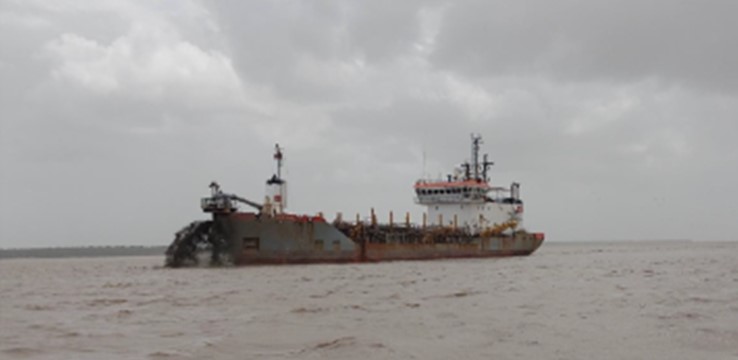
For industries operating in the interior — mining, forestry, agriculture, and ecotourism — the waterway network provides cost-effective bulk transport that road infrastructure alone cannot match. The Suriname River, dredged to accommodate commercial vessels, provides direct access from the interior to the Port of Paramaribo and the Atlantic Ocean.
Suriname River
Primary commercial artery, port access
Saramacca River
Agricultural and industrial transport
Coppename River
Western region connectivity
Marowijne River
Eastern border, mining logistics
A Complete Logistics Ecosystem
Beyond physical infrastructure, Suriname offers a mature ecosystem of logistics service providers, freight forwarders, customs agents, and specialised operators that support every stage of the supply chain.
Free Trade Zone
Suriname's free zone framework provides tax incentives and streamlined customs procedures for re-export and manufacturing operations targeting regional markets.
Oil & Gas Logistics
SOGLASS (Suriname Oil & Gas Logistics and Sustainable Support NV) provides specialised all-in-one logistics for the growing energy sector, including offshore supply chain management.
Freight Forwarding
A mature network of freight forwarders and customs brokers — including VSH Shipping, Paramaribo Cargo, and international operators — provides seamless import/export facilitation.
Industrial Warehousing
Port Boskamp's state-of-the-art marine infrastructure supports expanded logistics operations with modern warehousing and handling facilities along the Suriname River.
Regional Hub Potential
Suriname's position between Brazil, the Caribbean, and the Atlantic makes it a natural regional distribution hub. The government's SIDPS 2050 plan explicitly targets this opportunity.
SITA Investment Support
The Suriname Investment and Trade Agency (SITA) provides one-stop facilitation for investors — from permits and introductions to aftercare support and regulatory guidance.
A Government That Needs You to Succeed
Suriname's government has a direct financial interest in the success of every investment. This alignment of interests means faster approvals, stronger partnerships, and a regulatory environment designed to make projects succeed.
Moody's Upgrade
Credit rating upgraded from Caa3 to Caa1 in October 2024, reflecting improved macroeconomic stability and oil revenue outlook.
IMF Programme Completed
Suriname successfully completed its first-ever IMF Extended Fund Facility programme in March 2025, restoring fiscal credibility.
Stable Legal Framework
A clear, non-discriminatory investment framework with Production Sharing Contracts — the same model that attracted TotalEnergies and APA Corporation.
93% Forest Cover
Suriname maintains the highest forest cover of any nation on Earth — a natural asset and ESG credential that increasingly matters to global investors.
INVEST WITH CONFIDENCE
A Foundation Built to Last.
Suriname's infrastructure is not a promise — it is a proven, operational reality. The bridge is built. The dam is running. The port is open. The airport is expanding. The question is not whether Suriname can support your business. The question is:
when will you arrive?
Ready to Explore Infrastructure Investment in Suriname?
The Suriname Investment and Trade Agency (SITA) is your single point of contact from concept to implementation. Our team provides market intelligence, stakeholder introductions, permits guidance, and ongoing aftercare support.